
How to Buy a Landscaping Business in 2025: Commercial Contracts, Route Density, and Valuation Guide
The complete buyer's guide to acquiring a landscaping or lawn-care company in the United States — SDE multiples, commercial vs. residential mix, seasonality management, SBA 7(a) financing, and 90-day post-close playbook.
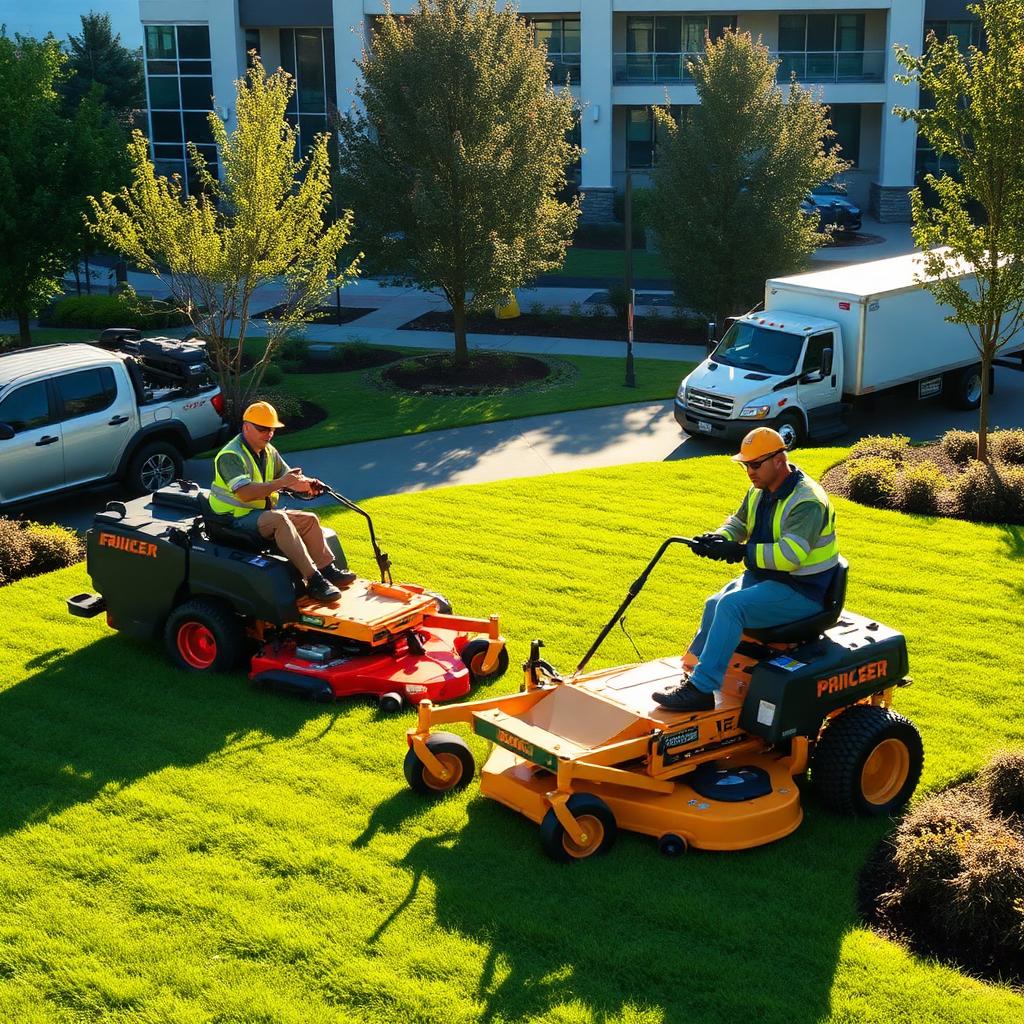
The landscaping market: bigger, stickier, and less seasonal than most buyers think
The US landscaping services industry is a $150B+ market with 600,000+ businesses — the vast majority under $1M in revenue and owner-operated. That fragmentation is the opportunity: professionalized operators with pricing discipline, commercial contracts, and route density consistently outperform the local competition, and there is a decade of runway for consolidation.
The reflexive concern from first-time buyers is seasonality. It is real for pure-residential mowing operations in northern climates — but the well-underwritten landscaping acquisition solves this with one or more of: heavy commercial-contract mix (year-round contracted revenue), snow/ice management in the winter, holiday lighting, southern geography, or a design-build book with $50K+ average project sizes. The businesses that survive due diligence look nothing like a two-truck residential mowing crew.
Valuation: what a landscaping company is really worth
Residential mowing-heavy landscaping businesses under $1M revenue typically trade at 2.0x–3.0x SDE — the low end of service-business multiples because customer concentration is low but contracts are annual-cancellable and gross margin is thin (25–35%).
Commercial maintenance-heavy landscaping businesses ($1M–$5M revenue with a majority of revenue on multi-year commercial contracts) trade meaningfully higher: 3.0x–4.5x SDE, driven by contracted recurring revenue and the operational leverage of routed commercial work. Design-build books with strong average project size and a documented project pipeline can push 3.5x–5.0x on SDE.
Above $1M EBITDA, private-equity-backed platforms are active buyers and multiples step up to 6x–10x EBITDA — expect a competitive process. Every one of these facts is worth 0.25x–0.75x on the multiple: (a) 60%+ commercial contracted revenue (premium), (b) integrated snow/ice book (premium), (c) route density with >10 stops/route (premium), (d) H-2B or seasonal labor dependency without a backup plan (discount), (e) owner running crews personally (discount), (f) no CRM/routing software (discount).
Commercial contracts vs. residential mowing — the whole valuation story
The single biggest driver of a landscaping business's multiple is its commercial-vs-residential mix. Commercial maintenance contracts (HOAs, office parks, retail centers, industrial campuses, municipalities) are typically 12–36 month written agreements with net-30 payment terms, defined scope, and 8–15% annual price escalators. They convert a lumpy, weather-exposed business into something a bank will actually underwrite.
During exclusivity, pull the contract schedule: contract count, term length, renewal rate (aim for >85% annually), monthly recurring revenue by contract, and the top-10 customer concentration. No single commercial customer should be more than 10% of revenue. Verify each contract is assignable to the buyer entity — municipal and property-management contracts often require formal consent to assignment.
Labor: H-2B, seasonal crews, and the retention problem
Labor is the number-one operational risk in landscaping. Many mid-sized operations rely on the H-2B seasonal worker program to fill April–November crews. If the seller has been using H-2B for 3+ years with the same visa agent and no denied petitions, that is a competitive moat you are buying — but it is also a compliance and lottery-timing risk that needs to be modeled explicitly.
For domestic labor, the 90-day close window is when foremen and crew leaders decide whether to stay. Meet every foreman and crew leader 1:1 before close (with the seller's blessing). Budget $1K–$5K per key foreman for 90/180/365-day retention bonuses. If the top two crew leaders leave in the first 60 days, the business you underwrote is not the business you own.
Route density, equipment, and the fleet reality check
A landscaping crew doing 12 stops per day on a tight commercial route is a fundamentally different business from a crew driving 90 minutes between residential accounts for 6 stops. Route density drives gross margin, technician retention (less drive time = better job), and how much of the business's SDE is real vs. an artifact of unpaid overtime.
Pull the customer list with addresses and build a heat map (Google My Maps works). Calculate stops per crew per day and average revenue per route mile by route type. Then get a truck- and equipment-level asset list: age, hours, and remaining useful life of every mower, truck, trailer, and skid steer. Landscaping equipment is capex-heavy — plan for 3–6% of revenue in annual fleet reinvestment. Add-backs like 'owner truck lease' need to be scrutinized carefully.
SBA 7(a) financing for landscaping acquisitions
Landscaping acquisitions in the $750K–$5M range are routinely closed with SBA 7(a): 10% buyer equity, 10% seller note on full standby for 24 months, 80% SBA bank debt over 10 years. Lenders will scrutinize commercial-contract mix, customer concentration, and labor plan more than they would for HVAC or pest control — but a well-structured deal absolutely gets funded.
Approach at least three SBA Preferred Lenders (Live Oak, Huntington, Newtek, Byline, Pinnacle) before submitting any LOI. Bring a written labor plan (retention plus H-2B contingency if applicable) and a written commercial-contract schedule to the underwriter — that is the difference between a 45-day and a 120-day close.
Diligence checklist specific to landscaping
Trade-specific checks to run during exclusivity: (1) Full commercial-contract schedule with term, price, escalator, and assignability. (2) Residential customer list with start date, monthly price, and lifetime revenue. (3) Snow/ice contract schedule if applicable — per-push, seasonal, or hybrid pricing structures. (4) Equipment and fleet list with age, hours, and titles. (5) H-2B petition history and current visa agent relationship. (6) Workers' comp experience modification rate — landscaping mods run high and the largest recurring cost surprise. (7) State pesticide-applicator license status if the business does chemical lawn treatment. (8) Municipal contract bonding and insurance requirements. (9) Design-build project backlog with signed contracts vs. verbal pipeline.
The 90-day post-close playbook
Day 1: transfer or re-issue every commercial contract certificate of insurance (COI) — most commercial customers require an updated COI naming the new entity within 30 days. Week 1: personally call the top-15 commercial accounts to introduce yourself and confirm the service relationship. Week 2: meet every foreman and crew leader 1:1; pay any 90-day retention bonuses already promised. Month 1: audit routing and CRM (LMN, Aspire, Jobber, Service Autopilot) — do not swap platforms in the first 90 days. Month 2: review pricing on the residential book and mid-tier commercial contracts; most acquired landscaping books are underpriced by 10–20%. Month 3: begin outreach on 2–3 tuck-in acquisitions or bolt-on service lines (snow/ice, holiday lighting, chemical lawn) to raise revenue-per-route.
Frequently asked questions
How much is a landscaping business worth?
Residential mowing-heavy businesses under $1M revenue trade at 2.0x–3.0x SDE. Commercial-contract-heavy businesses in the $1M–$5M range trade at 3.0x–4.5x SDE. Above $1M EBITDA, PE-backed platforms are active and multiples step up to 6x–10x EBITDA.
Is a landscaping business a good investment given seasonality?
Yes, if you underwrite the mix carefully. The well-structured landscaping acquisition solves seasonality with heavy commercial-contract density, snow/ice management in the winter, southern geography, or a design-build book. Pure northern-market residential mowing operations are the ones that struggle to service SBA debt Q4 through Q1.
Do I need a landscaping license to buy the business?
General landscaping does not require personal licensing in most states. However, if the business performs chemical lawn treatment (weed and pest control), it must employ a state-licensed pesticide applicator. Design-build work in some states requires a landscape contractor license. Verify at the state level during LOI.
What is the best landscaping business to buy for a first-time owner?
A $1M–$3M revenue business with 60%+ commercial-contract mix, a working general manager or lead foreman not named on the license, tight route density in one metro, and no single customer above 10% of revenue. That profile finances cleanly through SBA 7(a) and does not require the new owner to run crews personally.
How BusinessLocating helps you win
Our 150-person concierge sourcing team works the phones daily across the United States to find off-market HVAC, plumbing, pool, electrical, pest control, landscaping, and roofing businesses before they ever hit a listing site. We pre-qualify sellers, package financials, pre-screen with SBA Preferred Lenders, and coordinate legal, QoE, and licensing diligence — so first-time and repeat acquirers can close exclusive, highly profitable deals with confidence.