
How to Buy an HVAC Business in 2025: Valuation, Financing, and Diligence Playbook
The complete buyer's guide to acquiring an HVAC company in the United States — SDE multiples, licensing transfer, service-agreement diligence, SBA 7(a) financing, and the 90-day post-close plan.
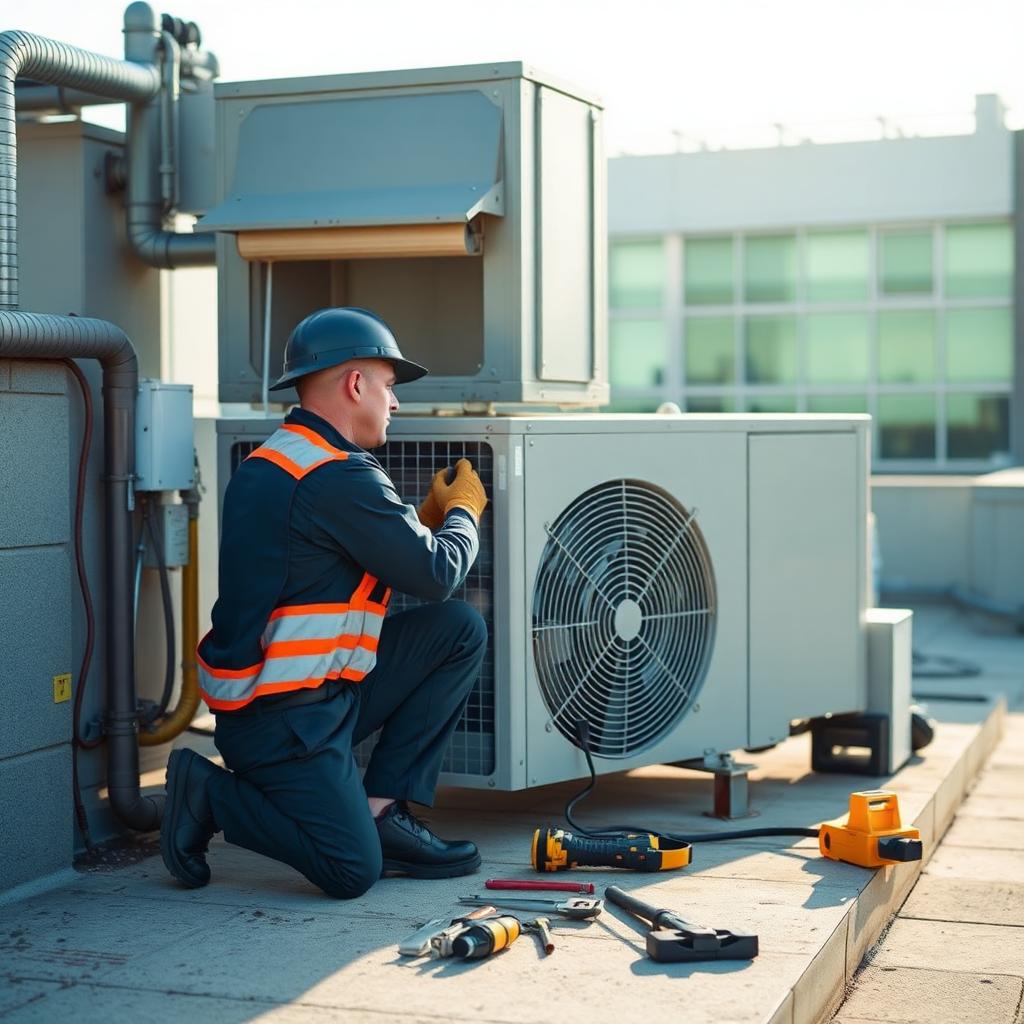
Why HVAC is the most-hunted service acquisition in America
HVAC sits at the intersection of every trend a first-time buyer wants: non-discretionary demand (a broken AC in Phoenix in July is not a discretionary purchase), recurring maintenance revenue via service agreements, high-ticket emergency replacements at 40–55% gross margins, and a $130B+ US market growing on the back of aging equipment, electrification rebates, and heat-pump adoption. Private-equity roll-ups have paid 8–12x EBITDA for platform HVAC shops for five straight years — and that competition has pushed independent SDE multiples up across the board.
For an owner-operator with $150K–$500K to invest, HVAC is arguably the most bankable service acquisition on the SBA docket. The trick is knowing which HVAC businesses are worth chasing, and which look profitable on paper but hide license risk, capex debt, or new-construction cyclicality.
Valuation: what an HVAC company is really worth
Independent residential/light-commercial HVAC businesses under $3M revenue typically trade at 2.5x–4.5x seller's discretionary earnings (SDE). A shop doing $1.8M revenue and $450K SDE will commonly sell in the $1.35M–$1.9M range. Add strong maintenance-agreement density (MSAs producing 25%+ of revenue), a service-and-repair mix over 70%, and a licensed non-owner tech, and the multiple moves toward the top of the range.
Above $1M EBITDA you enter strategic and PE-backed platform territory: multiples step up to 6x–10x EBITDA, and you are almost certainly in a competitive process. Commercial-focused HVAC (light commercial and refrigeration especially) commands a premium over pure residential because contracts are stickier and average ticket sizes are larger.
Every one of these facts is worth 0.25x–0.75x on the multiple: (a) owner is the only licensed master (discount), (b) 25%+ new-construction revenue (discount), (c) fleet older than 8 years (discount for hidden capex), (d) 500+ active MSAs (premium), (e) commercial mix above 40% (premium), (f) audited or reviewed financials (premium).
The master license: the number-one HVAC deal killer
Every state licenses HVAC contractors, and most require a designated Master Mechanical (or Class A Mechanical) license holder on staff for the business to legally pull permits and perform work. If the seller IS the master license holder and is exiting at close, you cannot legally operate on day one — full stop.
Three ways to solve it, in order of preference: (1) Retain the seller as W-2 Master for 6–24 months, formalized in the APA and a paid consulting agreement (not a handshake). (2) Pre-hire a credentialed master tech before close, with a signed offer letter and a retention bonus. (3) Pursue the master license yourself — realistic only if you have 2–5 years of documented supervised experience or your state offers a passable exam path for owners.
Verify license status directly with the state licensing board during LOI. Check for open complaints, disciplinary history, and expiration dates. Do not rely on the seller's assurance — a suspended license discovered in diligence has killed more HVAC deals than every other issue combined.
Service agreements (MSAs) are the whole valuation story
Maintenance Service Agreements — annual or bi-annual tune-up contracts that lock in 2–4 recurring visits per year — are the single most valuable asset an HVAC business owns. They convert one-time transactional customers into a predictable revenue base, they meaningfully raise the closing rate on repair-vs-replace conversations, and lenders will underwrite them like a subscription business.
Pull the MSA schedule during exclusivity: total active agreements, renewal rate (aim for >75% annually), average annual price, and revenue attributable to MSA-driven service and replacement work in the trailing 12 months. A book with 800 active MSAs at $250/year is a $200K recurring revenue floor plus a meaningfully higher LTV per customer — and buyers routinely pay 0.5x–1.0x higher SDE multiples for MSA-heavy shops.
Fleet, technicians, and hidden capex
Get a truck-by-truck fleet list with year, make, model, mileage, and title status. Trucks over 150K miles or 8 years old are next-year's capex — bake replacement cost into your model or negotiate the purchase price down. Verify every vehicle title matches the entity you are buying; personal-name titles are a common surprise.
Technician retention is the second existential risk after license. Get 1:1 meetings with every field tech before close (with the seller's blessing). Verify pay, route assignments, non-competes, and gut-check willingness to stay. Budget $2K–$10K per key technician for 90/180/365-day retention bonuses. The cost of retention is always cheaper than the cost of replacement.
SBA 7(a) financing — HVAC is a lender favorite
HVAC acquisitions in the $1M–$5M range routinely close at 10% buyer equity, 10% seller note on full standby for 24 months, and 80% SBA 7(a) bank debt over 10 years. Lenders love the sector: recurring MSA revenue underwrites cleanly to DSCR, trucks and equipment satisfy collateral requirements, and the industry has a strong repayment track record.
Approach at least three SBA Preferred Lenders (Live Oak, Huntington, Newtek, Byline, Pinnacle) BEFORE you submit any LOI. A pre-qualification letter signals seriousness, gets you to the front of the line with brokers, and doubles the seriousness with which off-market sellers take your call.
Diligence checklist specific to HVAC
Beyond standard financial and legal diligence, run these trade-specific checks during exclusivity: (1) State license status, category endorsements, and disciplinary history for every credentialed employee. (2) MSA book with renewal-rate calculation trailing 24 months. (3) Customer concentration — no single commercial account >10% of revenue. (4) Revenue mix: service-and-repair vs. replacement vs. new construction (aim for <20% new construction). (5) Warranty liability schedule — outstanding install warranties are inherited obligations. (6) Fleet titles, mileage, and lease/loan balances. (7) EPA 608 refrigerant handling compliance and technician certification cards. (8) Workers' comp experience modification rate — HVAC injuries at height and in attics push mods up quickly.
The 90-day post-close playbook
Day 1: confirm the master license is properly registered under the new entity or a retained qualifying party — do not perform work without it. Week 1: personally call the top 20 MSA and commercial accounts to introduce yourself. Week 2: meet every tech and CSR 1:1; pay any 90-day retention bonuses already promised. Month 1: audit dispatch software (ServiceTitan, Housecall Pro, FieldEdge) — do not swap platforms in the first 90 days. Month 2: benchmark pricing on tune-ups, diagnostics, and replacements against your local market; most acquired HVAC books are underpriced by 10–20%. Month 3: launch a formal MSA-renewal push and start conversations with 2–3 small independent shops in adjacent zips for tuck-in acquisitions.
Frequently asked questions
How much is an HVAC company worth?
Independent HVAC businesses under $3M revenue typically transact at 2.5x–4.5x SDE. A shop doing $1.8M revenue and $450K SDE will commonly sell in the $1.35M–$1.9M range. Larger commercial-focused shops above $1M EBITDA trade at 6x–10x EBITDA in the PE market.
Can I buy an HVAC business without being licensed?
In most states, yes — the company must employ a licensed Master Mechanical (or state equivalent) qualifying party, but the owner is not required to hold the license personally. Retaining the seller as W-2 Master for 6–24 months, or pre-hiring a credentialed master tech before close, are the two workable paths.
What is a good SDE multiple for an HVAC business?
2.5x–4.5x SDE is the working range for independent residential/light-commercial shops. Premium multiples (4.0x–4.5x+) go to businesses with 25%+ MSA revenue, >70% service-and-repair mix, a credentialed non-owner master, and a fleet under 8 years old. New-construction concentration and license risk each cost 0.5x–0.75x.
Is SBA financing easy to get for HVAC?
Yes — HVAC is one of the most lender-friendly service trades. Recurring MSAs underwrite cleanly to DSCR, trucks and equipment satisfy collateral, and repayment history is strong. Get pre-qualified with three SBA Preferred Lenders (Live Oak, Huntington, Newtek) before submitting any LOI.
How BusinessLocating helps you win
Our 150-person concierge sourcing team works the phones daily across the United States to find off-market HVAC, plumbing, pool, electrical, pest control, landscaping, and roofing businesses before they ever hit a listing site. We pre-qualify sellers, package financials, pre-screen with SBA Preferred Lenders, and coordinate legal, QoE, and licensing diligence — so first-time and repeat acquirers can close exclusive, highly profitable deals with confidence.